
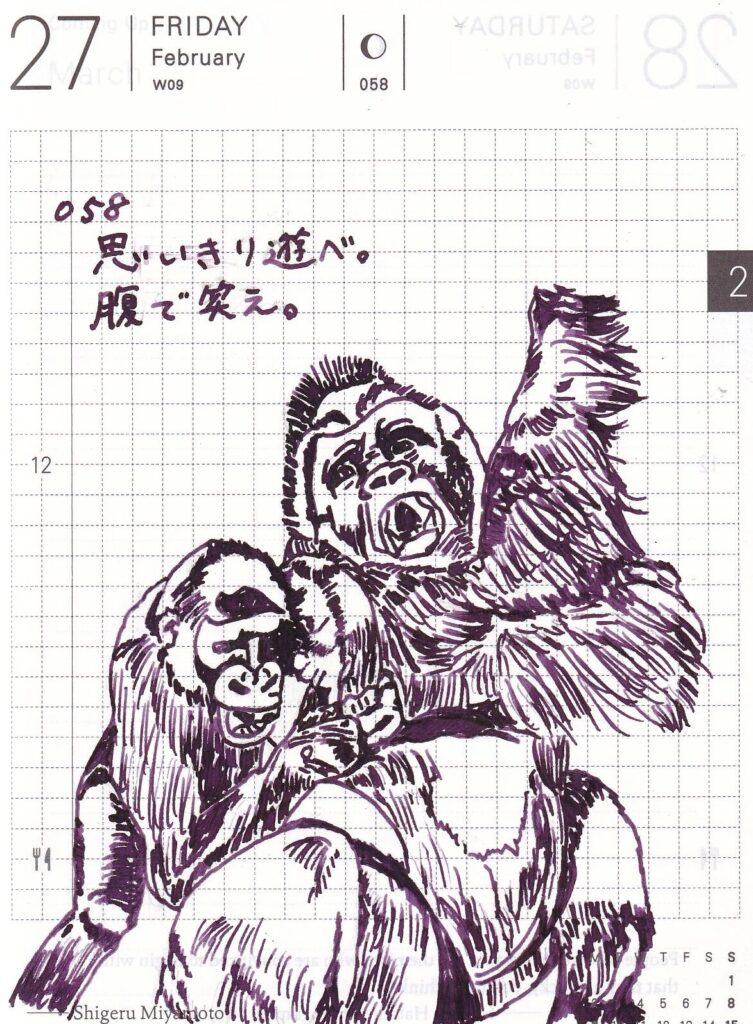
よく遊び、よく笑え
野生の子供のゴリラは笑い声を出して追いかけあったり、取っ組み合いをしながら、草の上を転がったり、とにかくよく遊ぶ。彼らが思う存分遊んだあとは、草がすっかり踏み倒されて広場のようになるほどだ。手が長くて足が短いゴリラの体つきは転がって遊ぶのにうってつけらしい。
グゴグゴグゴ・・・腹で笑うゴリラたち
遊びに誘うときのゴリラはきらりと瞳を輝かせ、ニヤリと微笑を浮かべる。遊びは1時間以上も続き、遊び方の種類も豊富だ。
遊んでいる間は、「グゴグゴグゴ」という笑い声が絶えずおこる。あぶく音のようなその不思議な笑い声は、お腹から出ているそうだ。人間にも「腹の底から笑う」なんて言葉があるけれど、ゴリラはまさに、「腹で笑っている」のだ。
人はなぜ「つくり笑い」をするのだろう。

面白くないのに、つくり笑いしちゃうんだよな…
ある日、娘がそう言った。
人間は、面白くなくてもその場の空気に合わせてつくり笑いをすることができる。
理由のひとつは、相手に対する思いやりの気持ちがあるから。笑っているフリをすることで、「空気を壊す気はないですよ〜」「私は敵ではありません」という非攻撃サインを出しているのだとすると、057のゴリラのドラミングに、ちょっぴり通じているような気もしなくもない。
でも、嫌だと言えないから笑う。怒りを飲み込む代わりに笑う。沈黙の代わりに笑う。そういう笑いもたくさんある。たしかにその笑いは、相手を傷つけないかもしれないが、自分の感覚を少しずつ鈍らせていく。さらには、周りからも「笑っているから大丈夫」という誤解が重なる。
笑い合っていても、ずっとすれちがったままだ。
笑いの複雑な両義性
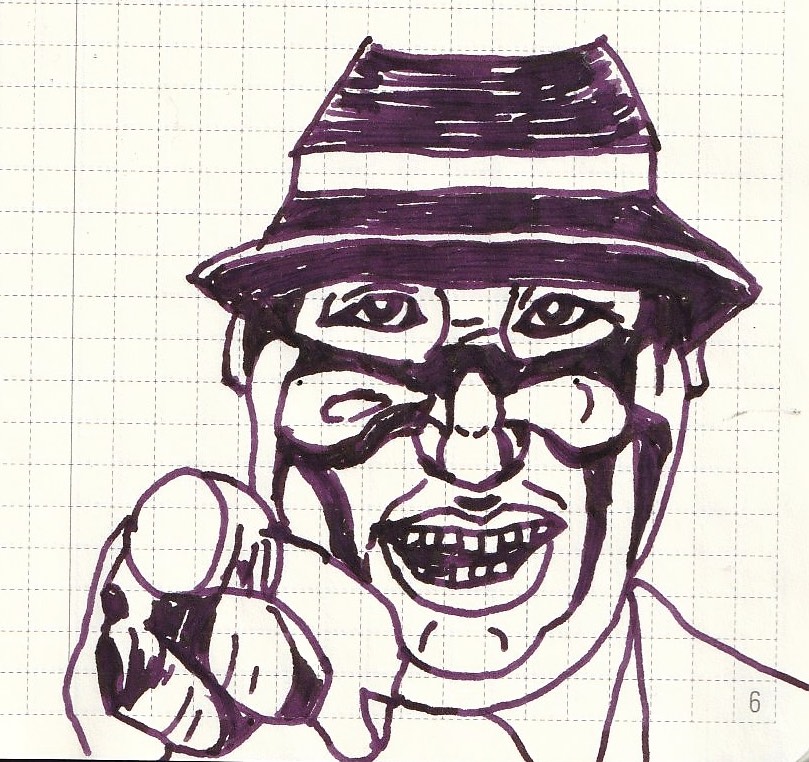
ここでふと「笑ゥせぇるすまん」の喪黒福造が浮かんだ。彼はいつも「笑み」を浮かべているが、その笑みはゴリラの笑みとは違う。
嘲笑、冷笑、失笑、苦笑、愛想笑い・・・彼の笑いは、人間の笑いのもつ、複雑な両義性を表現している。
娘の「つくり笑いしちゃうんだよな…」は、自分の心に嘘をつくことへの警告なのだろう。モヤモヤに気づいているうちはまだいい。さて、私は何と答えてあげたらよかったのだろう。
TOMOKO
GORIFULL 058 | Play, Laugh !
Laughing from the Belly
Wild gorilla children laugh out loud as they chase each other, wrestle, roll around in the grass, and play endlessly. After they’ve played to their hearts’ content, the grass is completely flattened, turning the area into a clearing. Gorillas’ long arms and short legs make their build perfect for rolling around and playing.
The “Smile” That Invites Play
When inviting others to play, gorillas are said to have their eyes sparkle and flash a sly grin.
Play sessions can last over an hour and involve a wide variety of activities. A peculiar “gugugugugu” laugh constantly erupts. This bubbling sound, like air bubbles, apparently comes from their stomachs. Humans have the expression “laughing from the belly,” but gorillas truly “laugh with their stomachs.”
*References
“Everything Important in Life I Learned from Gorillas” Juichi Yamagiwa
“Gorilla Trivia Notebook” Juichi Yamagiwa
Why do people fake smiles?
Even when it’s not funny, I end up forcing a smile…
One day, my daughter said. Yes, humans can fake a smile to fit the mood, even when they’re not amused. One reason is out of consideration for others. By pretending to laugh, they send a non-aggressive signal: “I don’t mean to ruin the mood~” or “I’m not your enemy.” In a way, this feels a bit similar to the Gorilla’s drumming(#057).
But often, we laugh because we can’t say we dislike something. We laugh instead of swallowing our anger. We laugh instead of silence. There are many such laughs. True, that kind of laughter might not hurt the other person, but it gradually dulls our own senses. Furthermore, the misconception builds that “it’s okay because everyone else is laughing too.” Even while laughing together, we remain completely out of sync.
The Complex Ambiguity of Laughter
Suddenly, Fukuzo Mourguro from “Warau Searuman” came to mind. He always wears a “smile,” but it’s different from a gorilla’s grin. Mockery, scorn, derision, bitter laughter… His smile expresses the complex ambiguity inherent in human laughter.
My daughter’s “I end up forcing a smile…” is a warning against lying to oneself. It’s still okay as long as you’re aware of it. Now then, what should I have said to her?
TOMOKO
